Hedge Cutting in Urmston
Hedge cutting with tree surgery kit behind it, from a tidy annual trim to a 30 foot leylandii row cut down in sections. All the green waste goes with us when we leave. Around three miles from our Stretford base.
Hedge Cutting for Urmston Gardens
Hedges do a lot of the quiet work on Urmston’s streets. The 1930s semis through Flixton, Woodsend and Crofts Bank were built with hedged front boundaries, and privet is still the local default: dense, forgiving, and quick to look scruffy the moment it misses a cut. Behind the houses it shifts to laurel, conifer and the odd leylandii screen that has been let go a storey too tall. Our hedge cutting covers the lot, from twice-a-year trims on a front privet to hard reductions that turn a green wall back into a hedge.
We cover Urmston and the surrounding area: Urmston town centre, Flixton, Flixton village, Davyhulme, Woodsend and beyond (M41).
Read more about our hedge cutting service, or see all our tree work in Urmston.
Get a Free Urmston Quote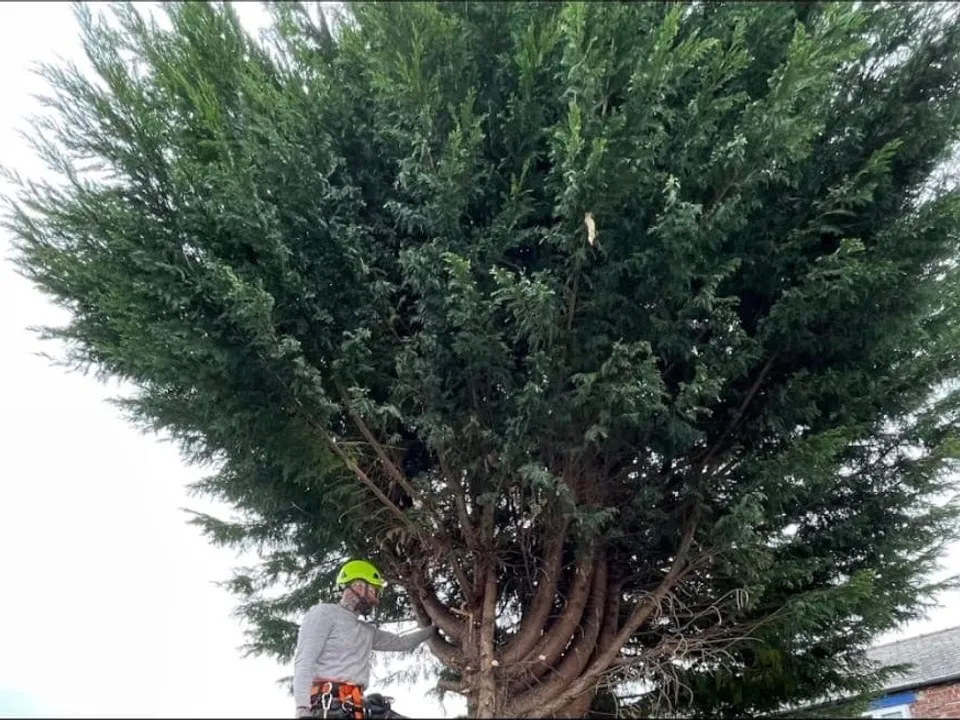
What’s Included
Nesting birds set the calendar for hedge work here. From February to August we check every hedge before the trimmers start, because active nests are protected by law and a thick hedge is exactly where they hide. A routine trim can nearly always go ahead once we know the hedge is clear, and the heavy reductions sit better in autumn and winter anyway, when the hedge can take the knock and recover.
- Maintenance trims that keep garden hedges square, dense and tidy
- Hard height and width reductions on hedges that have got away
- Overgrown leylandii and conifer rows taken down in sections, chainsaw and rope work included
- Straight answers on conifers before we quote: brown wood will not regrow
- Full hedge removals, with stump grinding for the stumps and roots
- Nest checks before every cut in season, clippings cleared and taken away
How It Works
Hedge Cutting in Urmston, FAQs
Yes, with one honest warning: leylandii will not regrow from bare brown wood, so a hedge can only come down and in so far before it stays brown for good. We tell you on the visit what yours can take, and if the kinder answer is removal and a fresh start, you will hear that too.
Twice a year keeps privet sharp: once in early summer, once in early autumn, with a nesting check before any cut between February and August. Privet is forgiving if you leave it longer, it just needs a harder cut to come back and looks bare for a few weeks afterwards.
Always, and it’s in the price, not an extra. Hedge work makes a surprising volume of waste, especially a conifer reduction where whole tops are coming off. Everything gets chipped or loaded, the lawn is raked, the paths are swept, and you’re left with a hedge, not a hedge plus a mountain of clippings.
Yes. The hedge comes down to ground level and gets carted away, then the stumps are ground out below the surface with a stump grinder. Grinding takes out the stumps and the main root plate so you can replant, seed a lawn or run a fence line through, though the finer roots stay in the ground and rot down naturally. If you want the line replanted with something better behaved than leylandii, we’ll advise on that when we quote.
In height, a long way. A 30 foot leylandii can be brought back to eight or ten foot by cutting the tops out in sections, and it will green over the new top within a season or two. The sides are the catch: leylandii won’t regrow from brown wood, so the faces can only be trimmed back to live green growth. If the hedge has grown too wide for the space, no amount of cutting fixes that, and we’ll say so before you spend money on it.