Hedge Cutting & Reduction in Greater Manchester
Hedge cutting with tree surgery kit behind it, from a tidy annual trim to a 30 foot leylandii row cut down in sections. All the green waste goes with us when we leave.
Hedge Cutting & Reduction
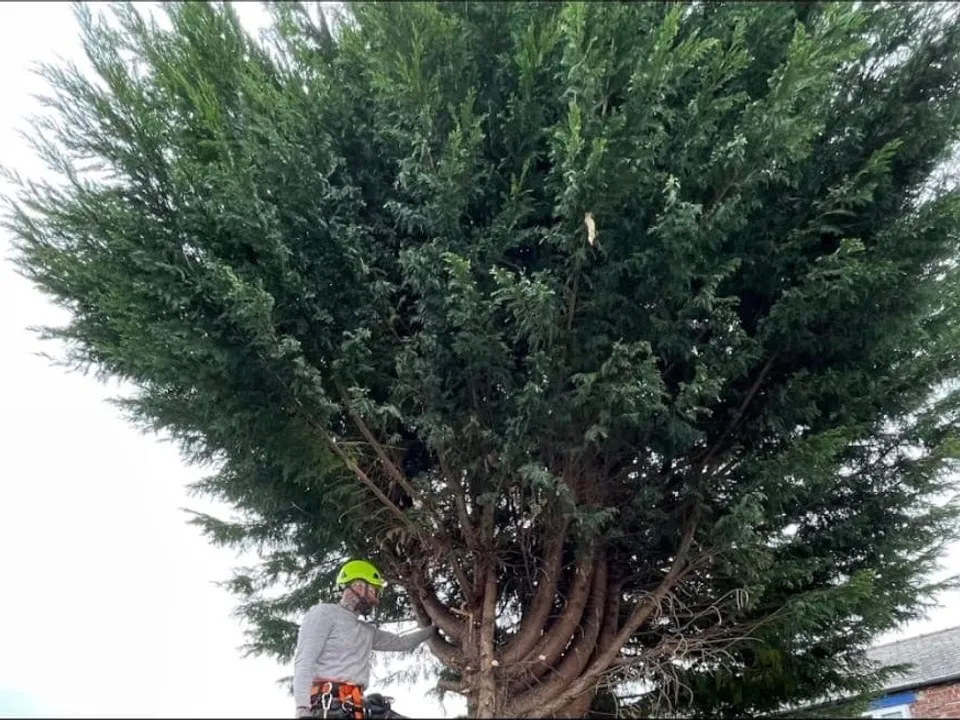
Some hedges stopped being hedges years ago. A row of leylandii planted for privacy and then left alone puts on a few feet a season, and by the time it hits 20 or 30 foot it’s a line of trees with trunks to match. That is past the reach of a man on a stepladder with a hedgetrimmer. It needs a tree surgeon: chainsaws, ropes and the sense to take the height off in sections so nothing lands on the fence, the greenhouse or next door. That’s the sort of hedge cutting we do a lot of, alongside the ordinary trims and reductions that keep a garden hedge in shape year to year.
Leylandii and most other conifers won’t grow back from brown wood, and that one fact shapes every conifer job we price. Height can come down a long way, but the sides can only be trimmed to where the green growth stops, so a hedge that has crept six foot wide will never be a slim one again. If removal and replanting beats another reduction, that is the answer you’ll get. Broadleaf hedges are a different story: privet, laurel, beech and hawthorn all shoot back from old wood, so even a badly overgrown one can usually be cut hard and grown back dense.
Birds nest in hedges between roughly February and August, and an active nest is protected by the Wildlife and Countryside Act. Hedge work isn’t banned over those months, it just has to be checked first, so we go through the hedge before a single cut is made and work around anything live. When the cutting is finished the clearing starts: every clipping and every length of conifer trunk raked up, loaded and taken away, with the lawn and paths swept before we go.
- Maintenance trims that keep garden hedges square, dense and tidy
- Hard height and width reductions on hedges that have got away
- Overgrown leylandii and conifer rows taken down in sections, chainsaw and rope work included
- Straight answers on conifers before we quote: brown wood will not regrow
- Full hedge removals, with stump grinding for the stumps and roots
- Nest checks before every cut in season, clippings cleared and taken away
How It Works
Get in touch
Call, message or use the form and tell us roughly what the hedge is doing. We respond within 24 hours and sort a time to come and see it.
Look and written quote
Tim checks the species, the height and what’s behind and beneath it, then you get a free written quote within 48 hours with a clear note on what a reduction can and can’t give you.
The cut
A nest check first in season. Trims are done with hedgetrimmers, and big reductions come down in sections with a chainsaw, roped where anything could drop where it shouldn’t.
Cleared and swept
The whole lot goes in the chipper or on the wagon: clippings, branch wood and trunk sections. Lawns raked, paths swept, and the garden left usable, not buried under brash.
Hedge Cutting FAQs
In height, a long way. A 30 foot leylandii can be brought back to eight or ten foot by cutting the tops out in sections, and it will green over the new top within a season or two. The sides are the catch: leylandii won’t regrow from brown wood, so the faces can only be trimmed back to live green growth. If the hedge has grown too wide for the space, no amount of cutting fixes that, and we’ll say so before you spend money on it.
That is exactly the work we’re set up for. Once the stems have thickened into trunks and the height is past 15 foot or so, it stops being a hedgetrimmer job and becomes tree work: sectional cutting, ropes and someone comfortable running a chainsaw at height. One thing worth knowing: in a conservation area, any stem wider than 75mm measured at 1.5m up needs six weeks’ written notice to the council before work, and an old hedge row can easily include stems that size. We check that for you and handle the paperwork.
Yes, with a check first. Nesting season runs roughly February to August, and an active nest is protected under the Wildlife and Countryside Act, so damaging one is a criminal offence. The law doesn’t stop hedge cutting in those months, it stops cutting through live nests. We search the hedge before we start, and if there’s a nest in use we cut around it or book the job in again once the young have gone.
Always, and it’s in the price, not an extra. Hedge work makes a surprising volume of waste, especially a conifer reduction where whole tops are coming off. Everything gets chipped or loaded, the lawn is raked, the paths are swept, and you’re left with a hedge, not a hedge plus a mountain of clippings.
Yes. The hedge comes down to ground level and gets carted away, then the stumps are ground out below the surface with a stump grinder. Grinding takes out the stumps and the main root plate so you can replant, seed a lawn or run a fence line through, though the finer roots stay in the ground and rot down naturally. If you want the line replanted with something better behaved than leylandii, we’ll advise on that when we quote.
Hedge Cutting Near You
We provide hedge cutting across Stretford, Sale and the surrounding towns. Pick your area for local details.