
Stump Grinding & Removal in Greater Manchester
Old stumps and fresh ones ground out below the surface, so lawn, planting or fencing can go where the tree used to stand.
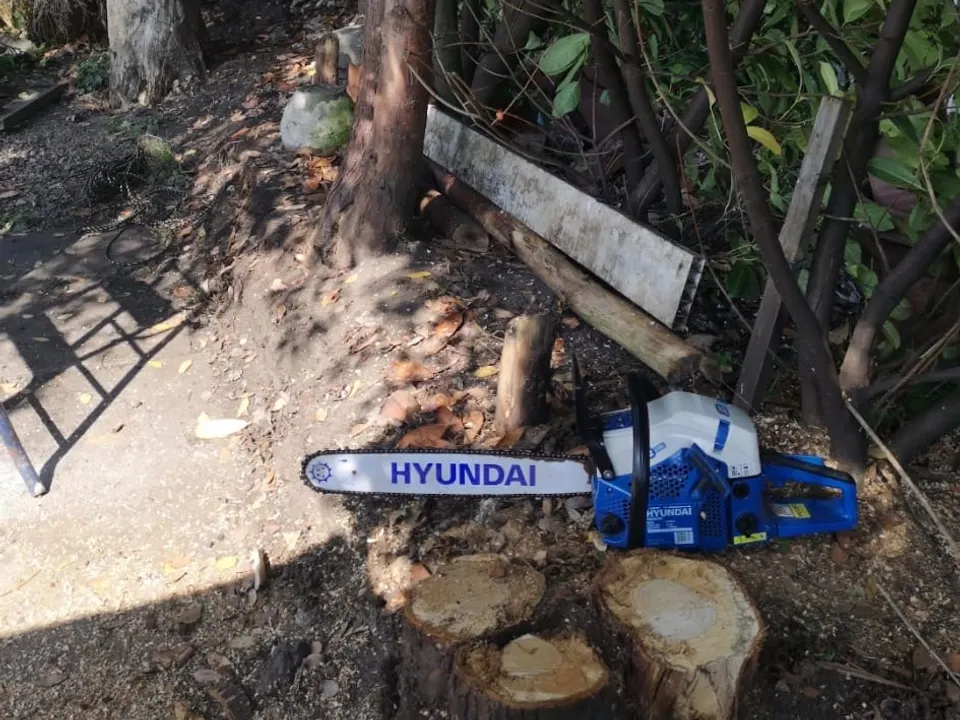
Stump Grinding & Removal
Once a tree comes down, the stump is what is left to trip over, mow around and stare at. Some species won’t take the hint either: elm, cherry and poplar keep throwing up suckers from the roots for years if the stump is left alive. A dead stump has its own problem, because rotting wood sitting in a garden is exactly what honey fungus is looking for, and once that gets established it can spread to healthy trees and shrubs nearby. On top of the risk, nothing useful can happen where a stump sits: no turf, no fence line, no new planting, no shed base.
Grinding is the quickest and cleanest form of stump removal for a normal garden. We bring in a purpose-built stump grinder and take the stump out to around 150 to 250mm below ground level as standard, deeper where you want to replant in the same spot. That leaves soil and woodchip where the timber was, so turf can go straight over the top. The grindings make a decent mulch for beds, so we either rake them out where you want them or load them up and take them away. Some of our stump grinding follows our own tree felling, and plenty of jobs are stumps another firm or a previous owner left behind years ago.
Access decides the machine. Terraced streets with a narrow gate or a ginnel round the back are fine as long as we know in advance, because grinders come in different widths and we bring one that fits, which is why we measure the access at the quote stage. Where a gate is too tight we can often lift a fence panel off and refit it after. And we’ll be straight with you about the stump itself: if it’s tucked in a corner, not suckering and not in the way of any plans, leaving it to rot down on its own costs nothing, and we’ll say so when that’s the sensible option.
- Stumps ground to 150 to 250mm below ground level, deeper for replanting
- Stops suckering regrowth from elm, cherry, poplar and other stubborn species
- Takes away the dead wood that honey fungus feeds on
- Narrow machines for tight gates, ginnels and terraced access
- Grindings left as free mulch or cleared away, whichever you prefer
- Free written quote within 48 hours, single stumps to whole gardens
How It Works
Get in touch
Call or message with a photo of the stump and the gate or path we would come through. We respond within 24 hours.
Quote and access check
We measure the access, size up the stump and ask about anything buried nearby, drains, cables or old footings, before the machine goes anywhere near it. Written quote within 48 hours.
The grind
The grinder comes in, boards go down where the lawn needs protecting, and the stump is ground out well below ground level, deeper if you are replanting in the same spot.
Backfill and tidy
The hole is backfilled with the grindings and levelled, or emptied ready for topsoil. Spare chip is spread as mulch or loaded away, and we sweep up before we go.
Stump Grinding FAQs
As standard we grind to around 150 to 250mm below ground level, which is plenty for turf, flower beds and most planting over the top. If you have a firm plan for the spot, a fence post, a shed base or a new tree, tell us when you book and we’ll grind deeper in that area. What no grinder can do is chase every root to its end, but the roots left behind die off and rot down naturally.
Yes, with a bit of preparation. We grind deeper than standard, clear the grindings out of the hole rather than backfilling with them, and you bring in fresh topsoil, because woodchip pulls nitrogen out of the ground as it rots and a young tree will struggle in it. If there is room, planting a metre or so to one side is even better, as the roots get clean ground to grow into. If the old tree died of honey fungus, tell us, because that changes the advice and we’d rather warn you before you spend money on a new tree.
For most trees, yes. Once the stump and the top of the root plate are ground out, the remaining roots have nothing to feed them, so they die off and rot in the ground. A few species, elm, cherry and poplar among them, can push up the odd sucker from leftover roots for a season or two. Those shoots come up weak, and pulling or mowing them off finishes the job. If a stump has been suckering for years already, grinding is still the fix, the roots just take a little longer to give up.
Less than people expect, and it is contained. The grinder throws chip, so we board or sheet around the stump, keep the guard down and work methodically. What is left afterwards is a pile of grindings and soil, not a crater: we backfill the hole, rake the surface level and sweep paths and paving before we leave. The grindings can stay as free mulch for your beds or go on the wagon with everything else, whichever you prefer.
Usually the opposite. A stump that has stood for a few years dries out and softens as rot gets into it, so it often grinds out faster than a fresh one, and fresh hardwood stumps are the slow ones. That is no reason to put the job off, though. The longer a dead stump sits there, the more inviting it is to honey fungus, and a suckering species will keep sending up shoots for as long as the stump has life in it.
Stump Grinding Near You
We provide stump grinding across Stretford, Sale and the surrounding towns. Pick your area for local details.