Crown Reduction, Thinning & Lifting in Greater Manchester
The whole crown brought down and in while the tree keeps its natural shape. Reduction, thinning and lifting, never crude topping.
Crown Reduction, Thinning & Lifting
A big tree can take over a garden. The lawn sits in shade most of the day, the borders give up, and every autumn the gutters fill again. Crown reduction sorts that by bringing the whole crown down and in, cutting each branch back to a healthy growth point so the tree ends up smaller without losing its shape. You get your light back, and the tree carries less sail in the wind, which matters on exposed corners and anywhere a big crown rocks about in a storm.
Topping is the one thing we won’t do to a tree. Sawing the crown off flat leaves big open wounds that rot, and the tree fights back with a mass of weak, fast regrowth that races past the old height within a few years, only now it’s poorly attached and worse in the wind than what you started with. A crown reduction takes each limb back to a growth point instead, so the wounds are small, the natural shape survives and the regrowth stays slow and steady. There’s a limit to how much can come off in one go though, and if a reduction can’t get the tree to the size you want, we’ll tell you straight. Sometimes felling and replanting something better suited is the honest answer.
Not every shaded garden needs a reduction. Crown thinning takes a portion of the smaller branches out evenly through the crown, so more light gets down to the garden and wind passes through rather than pushing against it, while the outline stays exactly as it was. Crown lifting takes off the lowest limbs to give you headroom over a drive, a lawn or the pavement. Part of the quote visit is telling you which of the three the tree actually needs, and if the answer is none because the tree is healthy and a sensible size, you’ll hear that too. Every job gets checked for Tree Preservation Orders first, and in nesting season, roughly February to August, we check the crown for active nests before a saw goes near it.
- Crown reduction cut back to growth points, so the tree keeps its natural shape
- Crown thinning for more light and less wind resistance without changing the outline
- Crown lifting over drives, lawns, paths and pavements
- Straight advice on how much can come off without harming the tree
- TPO and conservation area checks, with the council paperwork handled
- Brushwood chipped, timber cleared and the garden swept before we leave
How It Works
Tell us about the tree
Ring or message with what the tree’s doing: too big, too dark, catching the wind. We respond within 24 hours and sort a time to come and look.
Free written quote
We check the species and condition, agree what you want to achieve, look up any Tree Preservation Order, and get a free written quote to you within 48 hours.
The climb and cut
We work through the crown branch by branch, cutting back to growth points and roping the bigger limbs down so nothing lands on the beds, the fence or the shed.
Swept-up finish
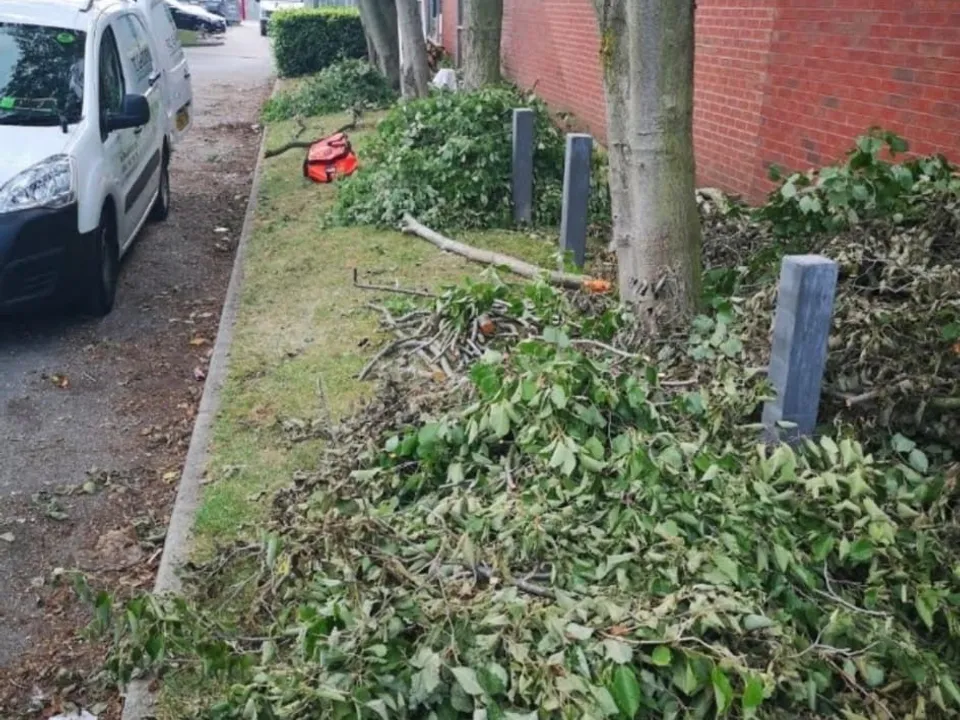
Brushwood gets chipped, timber is logged for you or taken away, and the lawn is raked and swept so the only sign we were there is a smaller tree.
Crown Reduction FAQs
Topping means sawing the crown off at a set height regardless of where the branches are. The tree’s left with big flat wounds it can’t seal, rot gets in, and what grows back is a thicket of fast, weakly attached shoots that are more dangerous than what was cut off. Crown reduction cuts each limb back to a suitable growth point instead: small wounds, natural shape kept, and regrowth that stays slow and sound. A topping quote often comes in cheaper because the work is cruder, but it ruins the tree and costs more over the years. We don’t top trees.
Up to about a third of the crown is the usual limit, and less on species that resent hard cutting. Take more than the tree can cope with and it reacts the same way it does to topping: stress, dieback and a flush of weak regrowth. If you need it smaller than one sensible reduction can manage, the honest options are staging the work over two or three visits a few years apart, or accepting the tree’s too big for the spot and looking at removal and replanting. We’ll lay it out plainly when we quote.
Yes, eventually. A reduction slows a tree down but doesn’t stop it, and most reduced crowns want revisiting every three to five years depending on the species and how strongly it grows. That’s normal maintenance, not a failed job. Topped trees are the ones that come back fast, because the panic regrowth after topping shoots up harder each round and leaves the tree in worse shape every time. A reduction cut back to growth points holds its size far longer and the tree stays sound between visits.
Usually, yes, but not until the council has approved an application for the work, and the application needs to spell out exactly what’s proposed. In a conservation area the rule’s different: the council needs six weeks’ written notice before work on any tree with a trunk wider than 75mm measured at 1.5m up. We check for TPOs and conservation areas on every job and handle the paperwork with you. Dead and dangerous trees have exemptions, but you need evidence before you cut, so talk to us first rather than risk a fine.
It depends what the problem is. If the tree’s too big, too tall, too wide or catching too much wind, it needs a reduction, because thinning doesn’t make a tree any smaller. If the size is fine but the garden underneath sits in heavy shade, thinning is usually the better and cheaper job: it takes density out of the crown so light gets through, and the outline doesn’t change. Plenty of trees we look at need less work than the owner expected, and some need none at all. We’ll tell you which at the free quote.