Tree Pruning & Trimming in Greater Manchester
Careful tree pruning and trimming that keeps trees healthy, safe and the right shape. Clean cuts at the right points, and every branch cleared away when we’re done.
Tree Pruning & Trimming
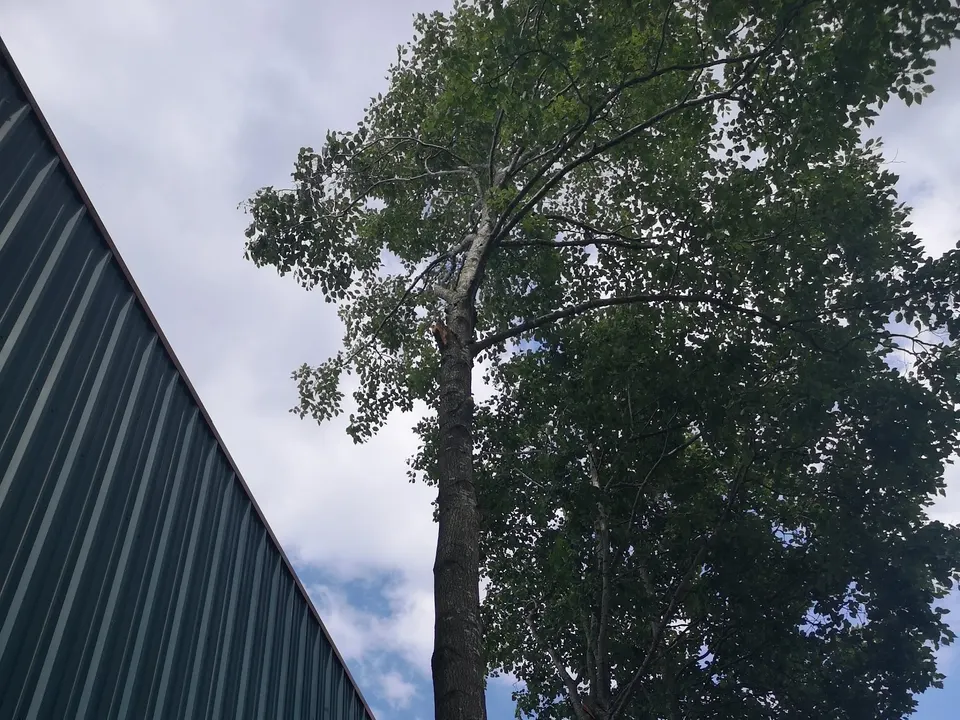
Most trees don’t need drastic surgery. They need the right branches taking off at the right time: dead and dying wood out before it drops, crossing and rubbing limbs removed before they wound each other, and a bit of thinning where the canopy has gone thick and dark. Good tree pruning keeps a tree healthy and safe, keeps its natural shape, and lets light back into the garden underneath it.
A lot of the trimming work we do is clearance. Branches scraping a roof or resting in the gutter, limbs hanging over a shed or a greenhouse, growth pushing into phone lines or spreading over next door’s fence. We cut each branch back just outside the collar, where the tree can seal the wound, rather than flush to the trunk or left as a stub that rots. It’s the difference between a tree that heals and a tree that lets disease in through every cut.
One honest warning: more is not better with pruning. Taking too much off in one go stresses a tree and forces a flush of weak, twiggy regrowth, so if a tree needs a big chunk out, a crown reduction is the better conversation and we’ll tell you so at the quote. Timing matters too. Bird nesting season runs roughly February to August and active nests are protected under the Wildlife and Countryside Act, so we check every tree before we cut and work around anything nesting in it.
- Deadwooding and removal of crossing or rubbing limbs
- Branches cut back off roofs, gutters, sheds and phone lines
- Overhanging growth trimmed back from next door and the street
- Thinning to let more light into the garden below
- Clean cuts at the branch collar, never flush cuts or stubs
- Nesting bird checks before any cutting, February to August
How It Works
Get in touch
Ring or message with a couple of photos of the tree and what it’s doing: shading the garden, scraping the roof, hanging over next door. We respond within 24 hours.
Free look and written quote
We come out, walk round the tree, and tell you what wants taking off and what doesn’t. We check for TPOs and conservation area rules too. Your free written quote arrives within 48 hours.
The pruning
A nest check first, then each branch comes off with clean cuts just outside the collar. Anything over a roof, greenhouse or fence is roped down under control, not dropped.
Swept-up finish
All the brash and branch wood is cleared and taken away, and lawns, beds and paths are swept and left tidy before we leave.
Tree Pruning FAQs
For most trees, late autumn and winter, while the tree is dormant and the bare branches let you see the structure. There are exceptions. Cherries, plums and other stone fruit should be pruned in summer to avoid silver leaf disease, and maples and birches bleed sap if cut in late winter, so they’re better left until midsummer. Deadwood can come out at any time of year. Tell us the species and we’ll tell you the right window.
Less than most people hope. A tree feeds itself through its leaves, so stripping a big share of the canopy in one visit starves and stresses it, and the tree answers with a rush of weak, fast regrowth that puts you back where you started. A good prune takes the deadwood, the problem limbs and a sensible amount of the rest. If a tree needs more off than that, the right job is a crown reduction, cut back to growth points so the tree stays healthy and natural looking, and we’ll quote it that way instead.
Only if it’s cut badly. Lopping branches off mid-limb leaves stubs that sprout dense clusters of weak, upright shoots, which is why topped trees look worse within a couple of years. Pruning back to a natural fork or to the branch collar doesn’t trigger that reaction. The tree seals the cut and carries on growing at its normal rate, so a tree pruned that way holds its shape for years while a hacked one needs doing again almost straight away.
Yes. Apples and pears are best pruned in winter to build an open shape that crops well, while cherries and plums want doing in summer, when there’s less risk of silver leaf infection. An old, neglected fruit tree is best brought back gradually, a portion each year over two or three winters, because hard cutting all at once trades fruit for a mass of watershoots.
Yes, as long as the tree is checked first. Nesting season runs roughly February to August, and it’s an offence under the Wildlife and Countryside Act to damage an active nest, but the law protects the nest, not the calendar, so pruning isn’t banned in those months. We look through the canopy before any cutting starts, and if there’s an active nest we leave that area alone and come back once the young have flown.
Tree Pruning Near You
We provide tree pruning across Stretford, Sale and the surrounding towns. Pick your area for local details.