Tree Pruning in Didsbury
Careful tree pruning and trimming that keeps trees healthy, safe and the right shape. Clean cuts at the right points, and every branch cleared away when we’re done. Around four miles from our Stretford base.
Tree Pruning for Didsbury Gardens
The avenues bring in most of our Didsbury pruning enquiries: mature limes and planes standing over the gardens of West Didsbury and the village, pressing on roofs, gutters and wires and pulling the light out of lawns. We prune for clearance and light with clean cuts in the right places, so the tree keeps its shape instead of throwing out a head of weak regrowth.
We cover Didsbury and the surrounding area: Didsbury Village, West Didsbury, East Didsbury, Withington, Burnage and beyond (M20).
Read more about our tree pruning service, or see all our tree work in Didsbury.
Get a Free Didsbury Quote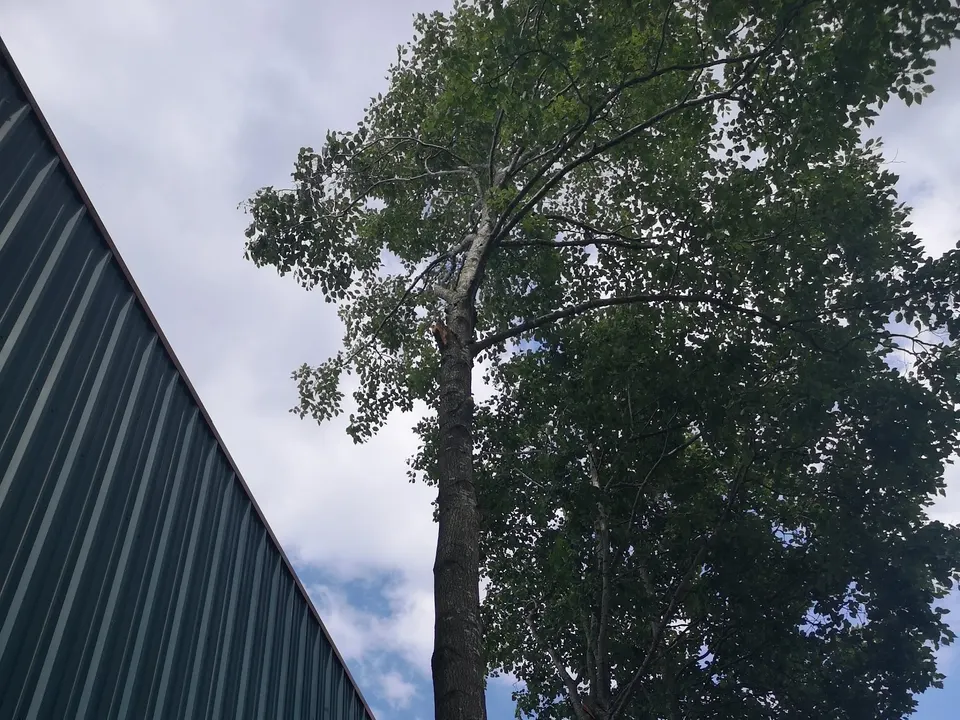
What’s Included
A lot of Didsbury’s big villas are now flats, and the trees in their shared gardens belong to everyone and no one. We are used to that: one site visit, one written quote that the residents or the managing agent can pass round, and the council paperwork handled in the same package. It stops a communal decision dragging on for months.
- Deadwooding and removal of crossing or rubbing limbs
- Branches cut back off roofs, gutters, sheds and phone lines
- Overhanging growth trimmed back from next door and the street
- Thinning to let more light into the garden below
- Clean cuts at the branch collar, never flush cuts or stubs
- Nesting bird checks before any cutting, February to August
How It Works
Tree Pruning in Didsbury, FAQs
Often, yes. Albert Park and Didsbury St James cover a big slice of M20, and even a modest prune on a tree with a trunk over 75mm at 1.5m needs six weeks’ notice to Manchester City Council inside them. Elsewhere, only trees with a TPO need consent. We check both before we quote.
With one written quote addressed to whoever manages the block. We survey the trees, set out what each one needs and what can safely wait, and the freeholder or residents’ association circulates it. Once it is agreed, we sort the council notice and book the work in.
Only if it’s cut badly. Lopping branches off mid-limb leaves stubs that sprout dense clusters of weak, upright shoots, which is why topped trees look worse within a couple of years. Pruning back to a natural fork or to the branch collar doesn’t trigger that reaction. The tree seals the cut and carries on growing at its normal rate, so a tree pruned that way holds its shape for years while a hacked one needs doing again almost straight away.
Less than most people hope. A tree feeds itself through its leaves, so stripping a big share of the canopy in one visit starves and stresses it, and the tree answers with a rush of weak, fast regrowth that puts you back where you started. A good prune takes the deadwood, the problem limbs and a sensible amount of the rest. If a tree needs more off than that, the right job is a crown reduction, cut back to growth points so the tree stays healthy and natural looking, and we’ll quote it that way instead.