Hedge Cutting in Altrincham
Hedge cutting with tree surgery kit behind it, from a tidy annual trim to a 30 foot leylandii row cut down in sections. All the green waste goes with us when we leave. Around six miles from our Stretford base.
Hedge Cutting for Altrincham Gardens
Altrincham hedges match its houses: generous. The villa plots towards Bowdon and The Downs are wrapped in mature beech, yew, holly and laurel hedges, often three or four metres tall and decades old, and they deserve cutting with some respect for what they are. We trim, reshape and reduce hedges of that scale across Altrincham, working safely at height where the hedge demands it and clearing every scrap of cuttings before we leave.
We cover Altrincham and the surrounding area: The Downs, Bowdon, Oldfield Brow, Broadheath, Timperley and beyond (WA14).
Read more about our hedge cutting service, or see all our tree work in Altrincham.
Get a Free Altrincham Quote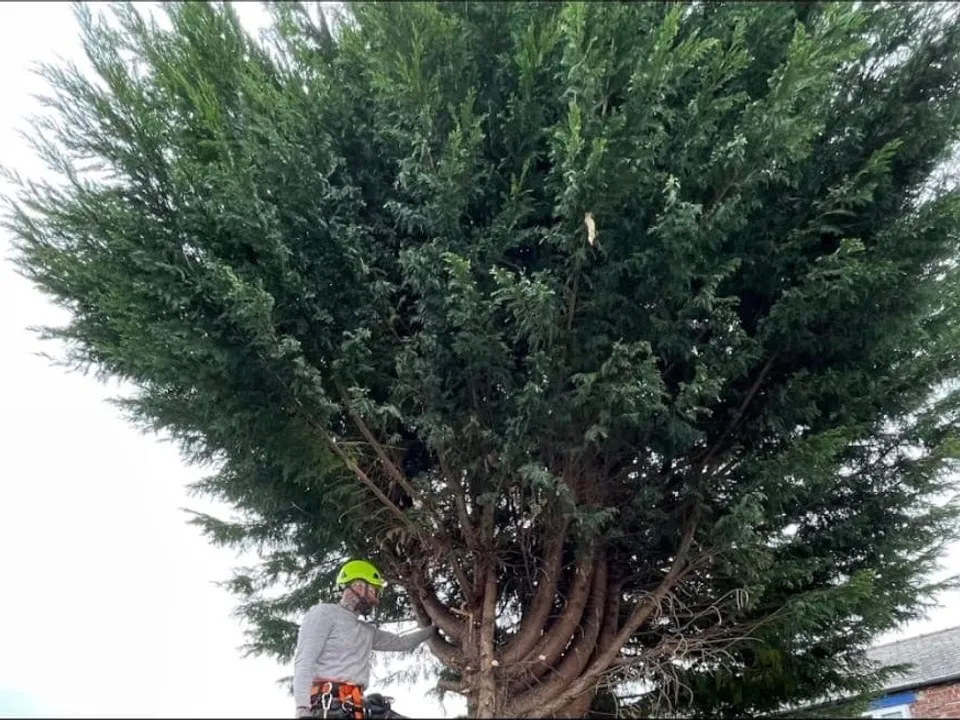
What’s Included
Overgrown leylandii is the hedge problem we get called to most in Altrincham. A conifer screen between two plots can put on a metre a year, and once it towers over both gardens the facts matter: leylandii cut back into brown wood will not green up again, so a hard reduction has limits. We take the top down and trim the green sides where that works, and where it will not, we talk you through removal and replanting rather than leaving you staring at a dead brown fence.
- Maintenance trims that keep garden hedges square, dense and tidy
- Hard height and width reductions on hedges that have got away
- Overgrown leylandii and conifer rows taken down in sections, chainsaw and rope work included
- Straight answers on conifers before we quote: brown wood will not regrow
- Full hedge removals, with stump grinding for the stumps and roots
- Nest checks before every cut in season, clippings cleared and taken away
How It Works
Hedge Cutting in Altrincham, FAQs
Usually, with an honest caveat. The top can come down a long way and the green sides can be trimmed, but conifers will not regrow from bare brown wood, so a hedge cannot always shrink as far as you would like. We look at it, tell you what a reduction can realistically achieve, and if removal is the better option we will quote for that too.
Any time of year, provided nesting birds are checked for first. Roughly February to August is nesting season, active nests are protected under the Wildlife and Countryside Act, and we inspect a hedge before cutting in those months. For the big evergreen hedges around Altrincham, a main cut in early autumn with a light tidy in summer keeps them dense and square.
Always, and it’s in the price, not an extra. Hedge work makes a surprising volume of waste, especially a conifer reduction where whole tops are coming off. Everything gets chipped or loaded, the lawn is raked, the paths are swept, and you’re left with a hedge, not a hedge plus a mountain of clippings.
Yes. The hedge comes down to ground level and gets carted away, then the stumps are ground out below the surface with a stump grinder. Grinding takes out the stumps and the main root plate so you can replant, seed a lawn or run a fence line through, though the finer roots stay in the ground and rot down naturally. If you want the line replanted with something better behaved than leylandii, we’ll advise on that when we quote.
In height, a long way. A 30 foot leylandii can be brought back to eight or ten foot by cutting the tops out in sections, and it will green over the new top within a season or two. The sides are the catch: leylandii won’t regrow from brown wood, so the faces can only be trimmed back to live green growth. If the hedge has grown too wide for the space, no amount of cutting fixes that, and we’ll say so before you spend money on it.