Emergency Tree Work in Timperley
A split trunk, a hanging limb or a tree down on the fence: call us and we’ll get to you as fast as we can, same day where we can. We make it safe first and sort the rest after. Around five miles from our Stretford base.
Emergency Tree Work for Timperley Gardens
Storm calls in Timperley tend to follow the water and the wind. The fast-growing trees along Timperley Brook and Fairywell Brook shed limbs in a big blow, and the gardens on the green-belt edge towards Timperley Wedge catch the weather coming in across open ground. After a rough night the calls are about split leaders, branches hung up over fences and paths, and whole trees down across drives.
We cover Timperley and the surrounding area: Timperley Village, Broadheath, Well Green, Heyes Lane, Brooklands and beyond (WA15).
Read more about our emergency tree work service, or see all our tree work in Timperley.
Get a Free Timperley Quote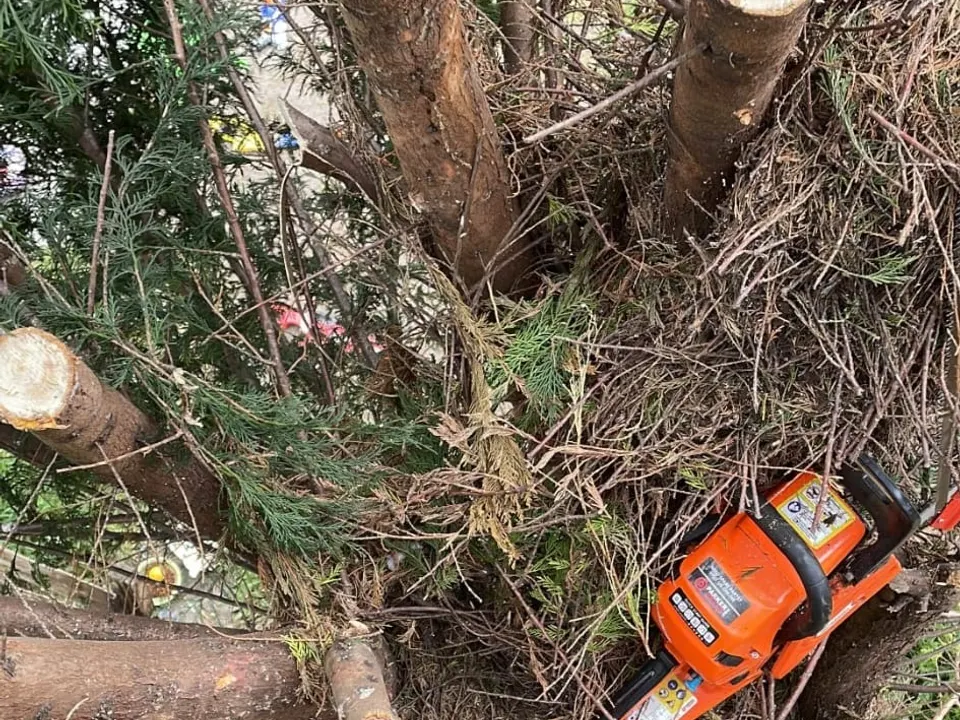
What’s Included
Straight talk on emergency response: nobody can guarantee a fixed arrival time, and we don’t. What we do promise is getting to Timperley as fast as we can, same day where we can, and being five miles up the road in Stretford helps. The first visit is about making things safe, taking the weight off a split stem or getting a fallen tree off the fence and the drive, and once the danger is gone we quote the tidy-up in writing. Dead and dangerous trees are exempt from the usual TPO process, but Trafford Council will want evidence, so we photograph everything before a saw goes near it.
- Storm-damaged, split and uprooted trees made safe
- Hung-up branches and hanging limbs brought down under control
- Fallen trees lifted off roofs, fences, sheds, cars and drives
- Everything photographed before we cut, ready for your insurance claim
- Straight advice on what needs doing now and what can wait
- Timber and brash cut up, cleared and swept before we leave
How It Works
Emergency Tree Work in Timperley, FAQs
As fast as we can, same day where we can. Stretford to Timperley is a five-mile run, so in a normal week we’re close by. In a big storm every tree surgeon in Greater Manchester is stretched, and we’d rather give you an honest arrival window when you ring than a promise we can’t keep.
Please don’t try. Fallen and hung-up trees hold tension in strange places and can spring or roll when cut, which is where the worst injuries happen. Keep people away, take photographs for your insurer, and ring us. If the tree was protected, those photographs also cover the evidence Trafford Council expects for emergency work.
As a rule the tree belongs to whoever owns the land it grows on, and if a healthy tree comes down in a storm the owner usually isn’t liable for the damage, because a storm is nobody’s fault. It changes if the tree was obviously dead, diseased or dangerous beforehand and the owner had been warned about it. Insurers argue those points between themselves, so the practical answer is: photograph everything, tell your insurer, and get the tree made safe first. We’re tree surgeons, not solicitors, so treat that as a rough guide rather than legal advice.
Often, but policies differ. Most home policies cover damage a fallen tree does to the building, cover for fences varies a lot, and some policies pay for removing the tree from whatever it hit. What every insurer wants is evidence, which is why we photograph the scene before we cut anything and give you a written record of the work done. Ring your insurer before we start if you can; if the tree could fall or drop a limb, making it safe comes first.
Usually not. Plenty of trees have leaned for decades and are perfectly stable. The warning sign is change: a lean that has got worse, soil lifting or cracking around the base, roots showing on one side, or ground that feels springy underfoot. If you spot any of that after a storm, keep people away from the tree and call us. If the lean is old and nothing has moved, it can wait for a normal visit rather than an emergency call-out, and that costs you less.